Did you know that nearly 40% of industrial facilities still use outdated twin lobe blowers that waste energy and require constant maintenance? I bet your utility bills are screaming for an upgrade.
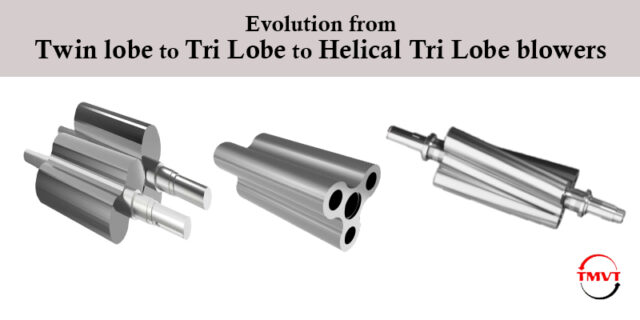
The evolution of blower technology from twin lobe to tri lobe to helical tri lobe blowers represents one of the most significant efficiency leaps in compressed air systems. Each iteration solved problems the previous generation couldn’t touch.
By the end of this post, you’ll understand exactly which blower technology makes sense for your operation’s specific needs, pressure requirements, and budget constraints.
But here’s what most suppliers won’t tell you about the latest helical tri lobe designs that’s changing everything about industrial air compression…
Understanding the Fundamentals of Blower Technology
- How Positive Displacement Blowers Transform Industrial Processes
Positive displacement blowers aren’t just fancy machines—they’re game changers for industries worldwide. They create consistent airflow by trapping and moving fixed volumes of air through their chambers. Think of them as the unsung heroes behind wastewater treatment, pneumatic conveying, and food processing operations.
- Key Components That Drive Blower Efficiency
The magic happens inside the housing where rotors (the heart of any blower) spin in perfect synchronization. Each design—twin lobe, tri lobe, or helical—features different rotor configurations that directly impact performance. Timing gears ensure precise rotor movement while bearing arrangements support high-speed operation under heavy loads.
Twin Lobe Blowers: The Original Workhorses
Engineering Principles Behind Twin Lobe Design
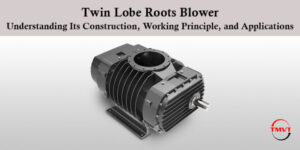
Twin-lobe blowers operate on a simple yet effective principle two figure-eight rotors spin in opposite directions, trapping and moving air without internal compression. Timing gears keep the rotors synchronized, ensuring they don’t touch while maintaining tight clearances. Instead of compressing air internally, they displace fixed volumes per rotation, delivering consistent airflow even with pressure changes. Rotor-to-housing clearances (0.05–0.2 mm) strike the right balance between efficiency and durability.
Advantages of Twin Lobe Technology in Industrial Applications
Twin-lobe blowers excel in applications where reliability matters more than peak efficiency. Their simple design offers key advantages:
● Highly durable with minimal moving parts
● Oil-free operation—ideal for food, pharma, and wastewater
● Stable performance under varying pressures
● Bi-directional use without modifications
● Self-cooling design—no external systems needed
● Easy, low-skill maintenance with standardized parts
These traits make twin-lobe blowers a trusted choice for facilities where uptime is critical and simplicity is a major asset.
Limitations That Prompted Evolution to Advanced Designs
Twin-lobe blowers, while reliable, have key limitations that spurred innovation. Their biggest drawback is noise—pulsating airflow causes pressure fluctuations reaching 85–95 dBA without silencers. Efficiency is another concern, with adiabatic efficiency at just 50–60%, especially poor above 14.7 PSI. Straight-cut rotors cause backflow at high pressures, needing larger motors, while tight clearances cap operating temperatures at 130–150°C. Pulsating flow also leads to vibration, demanding sturdier mounting for sensitive setups.
Industries Where Twin Lobe Blowers Still Excel
Despite newer technologies, twin lobe blowers remain the champions in several critical sectors:
| Industry | Application | Why Twin Lobe Works Best |
| Wastewater | Aeration, backwashing | Handles debris, consistent airflow despite varying water levels |
| Pneumatic conveying | Material transport | Reliable performance with varying material loads |
| Cement production | Fluidization, cooling | Durability in dusty, harsh environments |
| Food processing | Drying, packaging | Oil-free operation, simple sanitization |
| Textile | Fibre transport, drying | Consistent airflow regardless of material density |
These industries value the twin lobe’s predictable performance and forgiving nature more than absolute efficiency.
Cost-Benefit Analysis of Traditional Twin Lobe Systems
Twin-lobe blowers still offer strong financial value in many cases. They cost 15–30% less upfront and are 10–15% cheaper to install than tri-lobe or helical models. Annual maintenance runs 3–5% of the purchase price—higher than helical, but offset by easy servicing and widely available parts. However, energy use is a drawback: 50HP units typically consume 12–15% more power, with efficiency dropping further at higher pressures. While newer tech pays off in 24/7 operations (5,000–6,000+ hours/year), twin-lobe systems remain ideal for low-duty or intermittent use.
The Rise of Tri-Lobe Blower Technology
Revolutionary Design Improvements in Tri-Lobe Systems
The shift from twin-lobe to tri-lobe blowers marked a major leap in industrial performance. The third lobe significantly improved air pulse stability, eliminating the “thump-thump” pulsations of twin-lobe models and reducing vibration and strain. Tri-lobe blowers feature reengineered rotor geometry with precision-machined profiles and tighter clearances, cutting air leakage and boosting pressure by 15–20%. Additionally, enhanced bearing systems and specialized timing gears manage loads more efficiently, minimize wear, and ensure smoother, longer-lasting operation.
How the Third Lobe Enhances Operational Efficiency
That third lobe isn’t just for show—it fundamentally changes the blower’s performance curve. Let me break down exactly what happens when you add that extra lobe:
First, you get more frequent air delivery cycles per revolution. Twin lobes deliver two pulses per revolution, while tri-lobe systems deliver three. This increased frequency creates more consistent airflow and reduces the size of each pressure pulse.
The efficiency gains are impressive:
| Performance Factor | Twin-Lobe | Tri-Lobe | Improvement |
| Volumetric Efficiency | 75-80% | 85-90% | ~10-15% |
| Pressure Stability | Moderate | High | Reduced pulsations |
| Turndown Ratio | 2:1 | 3:1 | 50% improvement |
The tri-lobe design also shines in variable load applications. The more even distribution of forces means the blower can handle partial loads more efficiently without the dramatic efficiency drop-offs seen in twin-lobe models.
Another often overlooked advantage is maintenance intervals. The smoother operation of tri-lobe systems typically extends service intervals by 20-30% compared to twin-lobe equivalents, slashing your total cost of ownership.
Noise Reduction Achievements in Tri-Lobe Models
Industrial blower noise is more than a nuisance—it’s a real operational issue. Twin-lobe blowers often reach 85–95 dB(A), but tri-lobe technology addresses this through multiple innovations. The third lobe reduces pressure pulsations, cutting the harsh compression sounds. Redesigned discharge ports minimize turbulence, lowering noise by 5–8 dBA about half the perceived loudness. Advanced composite housings with vibration-dampening materials further reduce sound. As a result, tri-lobe blowers operate at 80–85 dBA without extra silencing. This not only improves worker comfort but also lowers compliance costs and allows installation closer to work zones.
Energy Consumption Advantages Over Twin Lobe Predecessors
Tri-lobe blowers offer significant energy savings compared to twin-lobe models, which convert just 55–60% of input energy into usable compression. Thanks to improved volumetric efficiency and reduced backflow, tri-lobe systems deliver more air per unit of power. In a 50HP 24/7 operation, they can cut electricity use by 5%, saving 40,000–60,000 kWh. Their efficiency holds better at higher pressures (10–15 PSI), and they outperform twin-lobe designs by 5% in specific power, making them a smarter long-term investment.
Applications Driving Tri-Lobe Adoption
Tri-lobe blowers have become the preferred choice across industries once dominated by twin-lobe systems. Wastewater plants adopted them early for their stable airflow, improving aeration and reducing oxygen fluctuations. Food and beverage companies use them for pneumatic conveying to ensure smooth material flow and prevent product damage. In cement manufacturing, tri-lobe blowers deliver precise air volumes, cutting energy use by 8–12%. Today, they make up over 85% of new positive displacement blower installations, replacing twin-lobe units as the industry standard.
Helical Tri-Lobe Blowers: The Cutting-Edge Innovation
The Engineering Breakthrough of Helical Rotor Design
The game-changer in blower technology isn’t just another incremental improvement—it’s a complete rethinking of how rotors interact. Helical tri-lobe blowers feature twisted rotor profiles that create a continuous contact point as they rotate, unlike the abrupt engagement of traditional straight lobes.
Think about it like this: traditional lobes slam together like hands clapping, while helical rotors smoothly roll into each other like waves. This revolutionary design distributes the air compression gradually across the entire length of the rotor rather than all at once.
The magic happens in the 3D geometry. Each lobe twists at a precise angle (typically 30-60 degrees), creating a spiral effect that transforms how air moves through the system. This isn’t just clever engineering—it’s the foundation for nearly every performance advantage helical blower deliver.
What makes this design truly brilliant is how it maintains the robust pumping capacity of tri-lobe technology while eliminating its primary drawbacks. The continuous engagement pattern means pressure builds smoothly, without the characteristic “huffing” of conventional designs.
Dramatic Noise Reduction Through Helical Technology
Helical tri-lobe blowers reduce noise by 10–15 dBA compared to traditional models—halving perceived loudness and often eliminating the need for costly sound enclosures. The difference lies in physics: conventional blowers create sharp pressure pulses that produce harsh, resonant sound waves. In contrast, helical rotors compress air gradually, avoiding the sudden “punch” that causes noise. Operators often report being able to speak normally beside running units—something impossible with older designs.
Pulsation Elimination and Smooth Airflow Benefits
Pulsation is a major issue with traditional blowers, causing vibration, equipment wears, and efficiency loss. Helical tri-lobe technology reduces discharge pressure fluctuations by over 90%, resulting in stable gauge readings and smooth airflow. This leads to longer equipment life, consistent process performance, reduced piping stress, lower backpressure, and more accurate flow measurements. For precision-critical applications like wastewater treatment or pneumatic conveying, this stability is essential. Plus, with less energy wasted on pulsation, overall efficiency improves significantly.
Significant Energy Savings That Impact Bottom Line
Blower costs often come down to power consumption—and helical tri-lobe technology delivers 15–30% energy savings over traditional lobe blowers, especially at higher pressures. In 24/7 operations, that means thousands saved per unit annually. These savings stem from reduced slip, lower friction, smoother airflow, fewer pressure pulsations, and less energy lost to vibration and noise. A medium-sized wastewater plant can save $20,000–$50,000 yearly, with many facilities seeing ROI in just 12–24 months based on energy savings alone.
Extended Equipment Lifespan Through Reduced Vibration
The real threat to industrial equipment is often long-term vibration damage, not sudden failure. Helical tri-lobe blowers eliminate the pulsation that causes vibration, reducing stress on bearings, seals, motors, piping, and control systems. This leads to 50–100% longer maintenance intervals and fewer bearing replacements. The benefits extend system-wide—less wear on instrumentation, tighter connections, and fewer emergency repairs. Many facilities report 2–3x longer blower service life, resulting in greater uptime, reliability, and lower maintenance costs over time.
Comparative Analysis Across Blower Generations
- Performance Metrics That Matter in Modern Applications
Ever wondered why industries are switching from twin lobe to newer blower designs? It’s all about the numbers. Helical tri lobe blowers deliver up to 30% higher flow rates than their twin lobe ancestors, while maintaining precise pressure control that modern manufacturing demands.
- Energy Efficiency Gains from Each Evolutionary Step
The jump from twin to tri lobe wasn’t just for show – it cut energy consumption by roughly 15%. Then helical designs swooped in with another 20% reduction. For a 24/7 operation, we’re talking thousands in savings annually. And who doesn’t want that kind of efficiency in today’s energy-conscious world?
Making the Right Blower Selection for Your Application
Selecting the right blower isn’t just about technical specs—it’s about choosing a solution that aligns with your operational needs, pressure requirements, and long-term efficiency goals. While twin-lobe blowers are still viable for basic applications, tri-lobe and helical tri-lobe technologies offer clear advantages in energy savings, noise reduction, and durability—especially in demanding environments.
As blower technology evolves, so do the opportunities for better performance and cost optimization. TMVT, India’s leading manufacturer of advanced roots blower systems, offers cutting-edge solutions across all three generations—twin-lobe, tri-lobe, and helical tri-lobe. With TMVT’s engineering expertise and proven track record, industries can confidently invest in the right blower technology to meet today’s challenges and tomorrow’s demands.