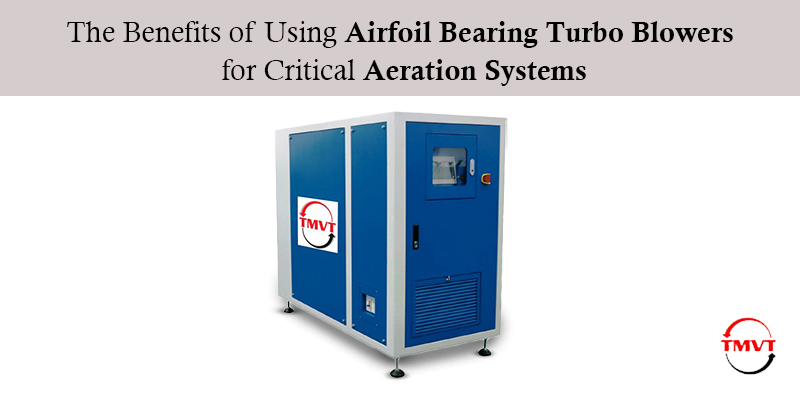
The Benefits of Using Airfoil Bearing Turbo Blowers for Critical Aeration Systems
The profitability and scalability of modern intensive aquaculture from large-scale Recirculating Aquaculture Systems to Biofloc Technology facilities, hinge entirely upon the reliable and continuous management of Dissolved Oxygen (DO). This non-negotiable requirement for aquatic life support translates directly into an overwhelming energy demand, often accounting for the single largest portion of Operational Expenditure (OPEX). For the industry engineer, the challenge is clear, legacy aeration systems, burdened by mechanical losses, complex maintenance, and low intrinsic efficiency, create an unsustainable cost profile. The financial viability of future aquaculture relies on a strategic technical pivot.
Why Airfoil Bearing Turbo Blowers Are Superior for Industrial Aeration
The shift from traditional, mechanically complex aeration systems to advanced air blower technology is driven by the Airfoil Bearing Turbo Blower’s unique integration of core technologies:
- Non-Contact Air Foil Bearings: Eliminating friction and mechanical wear.
- Permanent Magnet Synchronous Motor: Guaranteeing high electrical efficiency with zero slip.
- Gearless Direct Drive Architecture: Removing transmission loss and complexity.
- Variable Frequency Drive (VFD): Enabling dynamic, demand-based control.
This platform is engineered specifically to yield maximum efficiency and operational reliability, critical factors in determining the long-term profitability and success of large-scale aquaculture operations.
Why Aeration Efficiency Determines Profitability in Modern RAS and Biofloc Systems
Dual Functionality: DO Management and Bioprocess Support
In high-density systems, dissolved oxygen (DO) concentration is the paramount water quality parameter. Aeration, via the transfer of air, must support the respiration of aquatic species and the beneficial aerobes responsible for biological waste processing. Beyond oxygen transfer, the system must provide consistent water circulation and, crucially in BFT systems, generate sufficient, controlled mixing velocity to maintain the homogeneous suspension of sensitive biofloc particles.
Limitations of Conventional Aeration Systems in High-Density Aquaculture
Traditional aeration methods often exhibit low intrinsic Standard Aeration Efficiency due to mechanical energy losses. For instance, while some paddlewheel designs offer high instantaneous Standard Oxygen Transfer Rates for emergencies (e.g., 90 lbs O₂/hour or more), they frequently suffer from excessive energy consumption. When powered by equipment such as oversized tractors, a significant portion of the fuel or electricity consumed is lost in the drive train rather than effectively transferring oxygen, demonstrating a fundamental inefficiency and mechanical mismatch for modern industrial demand.
How Airfoil Bearing Architecture Enhances Reliability and Efficiency
High-speed turbo blowers, such as those designed by global manufacturers like TMVT, leverage superior mechanical and electrical design to overcome the energy losses inherent in geared and conventional systems.
Oil-Free Non-Contact Bearing Technology Explained
The Air Foil Bearing operates via dynamic aerodynamic pressure. As the rotor accelerates to high speed, an air film forms between the rotor and the bearing foils, suspending the rotor in a state of levitation and ensuring zero mechanical contact. This foundational design choice immediately eliminates wear, vibration, and the complete, catastrophic risk of oil contamination.
Gearless Direct Drive and PMSM Efficiency
The high-speed function is powered by a Permanent Magnet Synchronous Motor. Because the PMSM rotor contains permanent magnets, power is only used for shaft rotation, not for magnetization. Operating synchronously ensures zero slip, maximizing mechanical efficiency. The direct-drive architecture eliminates the complex, loss-prone gearbox and its associated pressurized lubrication systems, guaranteeing that rotational energy is transferred directly to the impeller. This combination delivers energy savings of up to 30% compared to legacy geared induction motor systems.
Technical Specifications of Turbo Blowers for Aquaculture Applications
The high-speed, gearless turbo blowers offered by TMVT provide flexible capacity to meet diverse industrial aeration demands.
| Parameter | Technical Specification (TMVT) | Relevance to Aquaculture Engineer |
| Capacity Range | 300 m3/hr to 18,000 m3/hr | Provides scalability for high-volume aeration demands in industrial RAS/BFT facilities. |
| Pressure Output | Up to 0.8 kg/cm2 (1 kg/cm2 special) | Sufficient pressure head for effective air diffusion in deep water columns and through fine-bubble diffusers. |
| Drive System | High Speed Gearless Direct Drive | Eliminates transmission loss and complexity; ensures maximum power delivery to the impeller. |
| Motor Type | Permanent Magnet Synchronous Motor (PMSM) | Zero slip, high intrinsic efficiency; contributes to energy savings up to 30%. |
| Bearing System | Non-Contact Air Foil Bearing | Oil-free operation, extremely low vibration, zero mechanical wear. |
| Control System | Customized Variable Frequency Drive (VFD) | Enables precision speed control for dynamic flow and pressure optimization. |
Improving Standard Aeration Efficiency (SAE) With Turbo Blower Technology
Aeration system performance is governed by two metrics, Standard Oxygen Transfer Rate (SOTR) – the mass of oxygen added per hour under standard conditions and Standard Aeration Efficiency (SAE) – the SOTR divided by the total power input (kg O2/kWh). The high intrinsic efficiency of the turbo blower platform directly maximizes the system’s SAE, translating the 30% electrical efficiency improvement into a proportional increase in the kg O2 delivered per unit of energy consumed. Highly optimized systems are capable of achieving SAE values exceeding 4.0 kg O2/kWh.
Oil-Free Blower Technology for Maximum Biosecurity
For sensitive intensive systems, biosecurity is paramount. The Air Foil Bearing technology provides an inherent guarantee of oil-free operation by design, completely eliminating the contamination risk present in conventional oil-lubricated geared systems.
However, this non-contact technology requires specific environmental controls. The bearings are sensitive to particulate matter. To ensure continuous reliability, stringent, multi-stage air filtration is a mandatory requirement for the installation site, protecting the non-contact system from operational failures caused by environmental ingress.
Intelligent VFD and PLC-Based DO Control for Precision Aeration
How VFD Optimization Reduces Aeration Energy Costs
The Variable Frequency Drive (VFD) is essential for achieving optimal efficiency. VFD speed control is exponentially more efficient than archaic throttling methods, which waste significant energy by generating excessive pressure only to dissipate it. The VFD dynamically reduces the speed of the Permanent Magnet motor, adjusting the pressure generated precisely to the level required by the application. Field data from similar intensive industrial applications confirm that implementing VFD control can yield substantial power cost reductions, often resulting in annual savings ranging from 12% to 17%.
PLC-Based Closed-Loop DO Management
Maximum efficiency and process stability are achieved through closed-loop control. The integrated Programmable Logic Controller continuously receives real-time feedback from Dissolved Oxygen (DO) probes installed in the aquaculture tanks. The PLC autonomously manages the VFD, adjusting the blower speed to precisely match the airflow to the instantaneous biological oxygen demand. This sophisticated, demand-based operation prevents wasteful oversaturation while securing against critical oxygen depletion, stabilizing the rearing environment for better Feed Conversion Ratios and enhanced yield quality.
Lowering Total Cost of Ownership With Airfoil Bearing Turbo Blowers
The procurement decision for industrial air blower technology must be viewed through a Total Cost of Ownership framework, which considers the complete lifecycle of the asset. In the industrial sector, operational costs are heavily weighted towards energy, typically accounting for approximately 85% of TCO, while capital investment and maintenance comprise the remainder. Although the initial Capital Expenditure for a high-speed turbo blower may be higher than conventional units, this investment is strategically offset by minimizing lifetime expenditure in the dominant OPEX categories.
Energy & Maintenance Savings: Rapid ROI Explained
The Air Foil Bearing system is financially self-justifying by maximizing savings in the two largest lifetime expenditure components:
- Energy Savings (The 85% Component):The intrinsic 30% electrical efficiency improvement combined with VFD optimization provides continuous, compounding savings, drastically reducing the lifetime energy cost.
- Maintenance Savings (The 5-10% Component):The gearless, non-contact design eliminates wear-related costs. Maintenance shifts from replacing consumables (oil, seals, belts) and mechanical parts (gears) to simpler periodic checks and filter replacement, ensuring a significantly lower long-term maintenance cost.
Field applications demonstrate that this combination of energy efficiency and reliability can lead to a rapid return on investment (ROI), with payback periods for VFD implementation alone often falling between 1.5 and 2.5 years.
| Cost Component | Air Foil Bearing Turbo Blower | Conventional Blower Technology (Reference) |
| Capital Investment | Higher (Advanced components, integrated control) | Low to Moderate (Mechanical design) |
| Operating Costs (Energy) | Extremely Low (High system efficiency; up to 30% saving) | Very High (High friction, transmission loss, throttling) |
| Maintenance Costs | Negligible (Zero oil, zero mechanical wear) | High (Routine oil changes, seal and gear replacement) |
| Downtime Risk Cost | Low (Predictive diagnostics, few mechanical failure points) | Moderate to High (Wear-related failures, risk of biomass loss) |
| Air Quality Integrity | Guaranteed Oil-Free (Critical for biosecurity) | Contamination Risk (Requires costly, secondary mitigation) |
| Overall TCO | Lowest over a 5-10 years lifecycle. | Highest due to continuous, excessive OPEX. |
TMVT – India’s Leading Supplier of Airfoil Bearing Turbo Blowers
The Airfoil Bearing Turbo Blower platform offers a robust, technically superior solution for the high-efficiency demands of modern intensive aquaculture. As a leading supplier of Airfoil bearing turbo blowers globally, operating from India, TMVT provides a system that is fundamentally designed for maximum Standard Aeration Efficiency, minimized operational complexity, and guaranteed biosecurity.
By adopting this non-contact, gearless, and intelligently controlled technology, engineers and system integrators can ensure process stability while strategically managing the critical 85% energy component of the Total Cost of Ownership. This transition is not merely an upgrade; it is a vital engineering decision that secures long-term profitability and sustainability in the rapidly evolving global aquaculture sector.

TMVT Team
Serving as the Editorial Lead at TMVT, I am a digital content expert passionate about manufacturing innovation and industrial efficiency, committed to delivering high-quality updates and technical guides on machinery trends for our global client base.