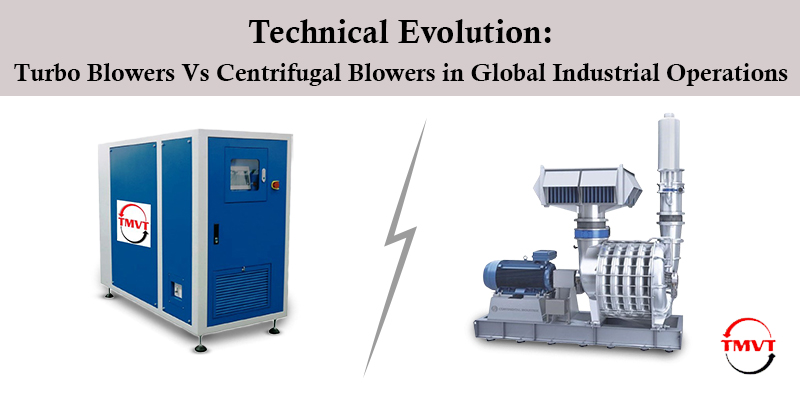
Technical Evolution: Turbo Blowers Vs Centrifugal Blowers in Global Industrial Operations
The landscape of industrial air and gas handling has undergone a profound transformation since the mid-20th century, shifting from basic ventilation requirements to highly sophisticated, energy-integrated processes that demand absolute precision. TMVT has ascended to become one of India’s premier manufacturers of advanced blower and vacuum systems, currently serving over 1000+ clients globally.
As modern industries face intensifying pressure to reduce their carbon footprint while simultaneously increasing throughput, the choice between high-speed turbo blowers and multi-stage centrifugal blowers has emerged as a critical determinant of operational success.
This report provides an exhaustive technical comparison of these two technologies, drawing exclusively on the engineering standards and product specifications of TMVT to guide industry engineers and facility owners toward the optimal solution for their specific air handling requirements.
The Physics of Dynamic Compression
Both turbo blowers and centrifugal blowers fall under the category of dynamic compression machines. Unlike positive displacement (PD) blowers, which trap a fixed volume of air and force it through a discharge port, dynamic blowers utilize a rotating impeller to impart kinetic energy to the gas stream. This kinetic energy is subsequently converted into static pressure as the gas is decelerated in a volute or diffuser. The relationship between the impeller’s rotational speed and the pressure generated is defined by the fundamental laws of turbomachinery.
High-Speed Gearless Turbo Blowers
The High-Speed Gearless Turbo Blower represents the apex of TMVT’s energy-efficient offerings. Engineered for applications that demand continuous, high-efficiency aeration, these machines eliminate the mechanical complexities of traditional drive systems.
Air-Foil Bearing Technology
A defining characteristic of the high-speed turbo blower is the use of aerodynamic air-foil bearings. Unlike traditional ball bearings that require constant lubrication and are subject to mechanical wear, air-foil bearings utilize the high rotational speed of the shaft to generate a pressurized film of air. This film allows the shaft to rotate without any physical contact with the bearing housing, effectively levitating the rotor assembly during operation.
This non-contact operation provides several mission-critical advantages:
- 100% Oil-Free Air: Since there are no physical contact and no need for oil lubrication, the risk of downstream air contamination is completely eliminated. This is a non-negotiable requirement in sectors such as pharmaceutical manufacturing, food processing, and fine-bubble wastewater aeration.
- Reduced Mechanical Stress: The absence of friction significantly reduces the heat generated within the bearing assembly, leading to extended component life and higher reliability.
- Vibration-Free Operation: The air-foil design inherently dampens vibrations, resulting in a machine that does not require heavy, reinforced concrete foundations for installation, thereby reducing civil engineering costs.
Permanent Magnet Synchronous Motors (PMSM)
TMVT integrates PMSM into its high-speed turbo blowers to achieve industry-leading motor efficiencies, often reaching 98%. Traditional induction motors suffer from slip, a difference between the speed of the magnetic field and the rotor, which results in energy loss. In contrast, the PMSM’s rotor is synchronized with the magnetic field, providing a direct connection to the impeller with zero transmission loss.
The high energy density of these motors allows them to operate at speeds ranging from 20,000 to over 40,000 RPM, which is essential for single-stage dynamic compression. When combined with a sophisticated Variable Frequency Drive (VFD), the blower can modulate its speed with extreme precision to match the exact demand of the process, ensuring that no energy is wasted during periods of low load.
Performance and Efficiency Metrics
The efficiency gains realized by TMVT turbo blowers are not merely incremental; they represent a step-change in performance. In wastewater treatment applications, the aeration process can account for up to 60% of a plant’s total energy consumption. Upgrading to a TMVT high-speed turbo blower can result in energy savings of 20% to 40% compared to traditional technologies.
| Parameter | Turbo Blower Specification |
| Bearing Type | High-Speed Air-Foil Bearing (Non-Contact) |
| Motor Type | Permanent Magnet Synchronous Motor (PMSM) |
| Drive System | Direct Drive (Gearless and Beltless) |
| Operating Speed | 20,000 to 60,000 RPM |
| Compression Stage | Single-Stage High-Efficiency |
| Efficiency (Wire-to-Air) | Up to 80% |
| Noise Level | < 85 dBA (Integrated Sound Enclosure) |
| Lubrication | 100% Oil-Free |
Multi-Stage Centrifugal Blowers System
While turbo blowers excel in specific high-efficiency niches, the Multi-Stage Centrifugal Blower remains a versatile and robust solution for a broader range of industrial duties, including vacuum applications and aggressive gas handling. These machines are built for longevity and are capable of handling high-volume requirements with a simple, safe, and highly reliable design.
Structural Integrity and Fabricated Design
The multi-stage centrifugal range is distinguished by its cast aluminium structure, which is precisely machined to fine tolerances. A unique fabricated design is utilized to optimize sealing and reduce air leakage to an absolute minimum, ensuring consistent performance even in demanding environments.
The rotor assembly of these blowers is dynamically balanced, a process that ensures smooth, quiet operation across the entire performance range. Depending on the specific pressure or vacuum requirements, TMVT can configure these machines with a variable number of stages, typically ranging from a minimum of 7 to a maximum of 10 stages. This modular approach allows for the stacking of pressure, where each stage increases the compression of the air until the final discharge pressure is achieved.
Gas Sealing and Aggressive Environments
One of the primary strengths of TMVT’s centrifugal blowers is their ability to handle aggressive or hazardous gases. In applications where the gas being moved is corrosive, toxic, or explosive, utilizes double mechanical seals to achieve airtight containment. This level of engineering is critical for industries such as petrochemical processing and landfill gas recovery, where leakage is not only an efficiency concern but a significant safety risk.
The centrifugal design is also inherently more robust against dirty air than high-speed turbo blowers. While turbo units require ultra-fine filtration to protect their high-speed components, the lower rotational speeds and larger internal clearances of the centrifugal range allow them to operate reliably in environments with higher particulate concentrations.
Technical Specifications for Centrifugal Systems
The multi-stage centrifugal blower range provides a continuous delivery of dry, clean, and non-pulsing air, making it ideal for processes requiring constant pressure.
| Specification | Multi-Stage Centrifugal Range |
| Flow Rates | 100 to 70,000 m³/hr |
| Max Pressure | Up to 1.8 bar |
| Max Vacuum | Up to 6700 mm H2O (WG) |
| Standard Stages | 7 to 10 (Customizable) |
| Bearing Options | Hydrodynamic or Ceramic Ball Bearings |
| Housing Material | Cast Aluminium (Precisely Machined) |
| Sealing System | Unique Fabricated Design / Double Mechanical Seals |
| Output Characteristics | Non-Pulsing, Constant Pressure |
Technical Comparison: Turbo vs. Centrifugal
Choosing the right blower technology requires a detailed analysis of the application’s operating profile, environmental conditions, and financial objectives. As an expert manufacturer of both systems, TMVT provides a nuanced perspective on the trade-offs involved.
Part-Load Efficiency and Turndown
In most industrial processes, the demand for air is not constant. High-speed turbo blowers excel in these variable-load environments. Because they are driven by VFD-controlled PMSM motors, they can turn down their speed to match lower demand while maintaining a high level of efficiency.
In contrast, traditional multi-stage centrifugal blowers are typically optimized for a specific design point. While they are highly efficient at this point, their efficiency drops more significantly when the flow is reduced, particularly if the reduction is achieved through inlet throttling or discharge bypass. For processes with frequent and prolonged periods of low-demand, the energy savings provided by the TMVT turbo blower often justify its higher initial capital cost.
Performance Curves and Stability
The performance curve of a blower describes how the flow rate changes in response to changes in system pressure.
- Turbo Blowers: Typically feature a steeper performance curve. This means they deliver a relatively constant airflow even if the system pressure fluctuates slightly, which is ideal for maintaining stable dissolved oxygen levels in wastewater aeration tanks.
- Centrifugal Blowers: Usually have a flatter performance curve. This allows the flow rate to change significantly with small changes in pressure, which can be advantageous in ventilation systems where the system resistance might vary.
Durability and Product Lifespan
TMVT engineers its blowers for the long haul. A properly maintained multi-stage centrifugal blower can have a functional lifespan of 10 to 15 years, depending on the severity of the industrial environment. However, the advanced design of the high-speed turbo blower, with its lack of wearing parts in the air-foil bearings, can push this lifespan to 15-20 years or more.
| Feature | High-Speed Turbo Blower | Multi-Stage Centrifugal Blower |
| Initial Cost (CAPEX) | Higher | Lower |
| Operating Cost (OPEX) | Lower (High Efficiency) | Higher (Lower Part-Load Efficiency) |
| Maintenance Burden | Minimal (Filter changes) | Moderate (Lubrication/Inspection) |
| Footprint | Compact | Large |
| Foundation Requirement | Minimal / No heavy foundation | Standard Industrial Foundation |
| Noise & Vibration | Very Low | Moderate |
| Air Sensitivity | Sensitive to particulates | Robust |
| Gas Handling | Best for clean air/gas | Best for aggressive/dirty gas |
Strategic Industrial Applications
TMVT’s broad product portfolio allows it to serve as a holistic solution provider for air and gas handling across diverse sectors. The application of each technology is driven by the specific needs of the industry.
Environmental and Wastewater Engineering
Wastewater treatment is the primary application area for TMVT high-speed turbo blowers. In processes such as the Activated Sludge Process (ASP) and Sequencing Batch Reactors (SBR), continuous aeration is required to sustain the aerobic microorganisms that digest organic waste.
The turbo blower offers:
- Precise DO Control: By modulating speed via the VFD, plant operators can maintain exact Dissolved Oxygen (DO) levels, improving the quality of the treated effluent.
- Chemical Reduction: Improved aeration efficiency can sometimes lead to optimized biological processes that require fewer chemical additives.
- Low Noise Pollution: Many treatment plants are located near urban areas. The quiet operation of TMVT turbo blowers (<85 dBA) makes them a better neighbour in these environments.
For larger municipal plants, TMVT also supplies multi-stage centrifugal blowers for grit tank cleaning and filter backwashing, where robust, high-volume air delivery is required for short durations.
Chemical and Petrochemical Industries
The chemical sector demands precision and safety, categories where TMVT’s Precision Products excels. In petrochemical operations, blowers are often used for gas boosting, solvent vapor extraction, and the handling of digester gases.
Multi-stage centrifugal blowers are the preferred choice for handling methane-rich biogas or landfill gas, which can be both explosive and corrosive. The use of ATEX-certified components and specialized materials ensures that TMVT systems remain compliant and safe in Zone 1 environments. These systems are designed to withstand the rigorous demands of oil-derived chemical production, providing consistent high-pressure performance.
Food, Beverage, and Dairy Processing
In the food industry, evaporation and distillation are energy-intensive processes. TMVT’s Mechanical Vapor Recovery (MVR) technology utilizes blowers (both turbo and centrifugal) to recompress process vapor, significantly cutting steam consumption sometimes by over 70%.
Applications include:
- Fruit Juice Concentration: Removing water from juices while preserving delicate aromatic Flavors.
- Dairy Production: Evaporating water to produce milk powder, a process that relies on the consistent, high-volume performance of TMVT blowers.
- Pneumatic Conveying: Using oil-free air to transport delicate food materials like powders and grains without contamination or damage.
Economic Analysis: The ROI of Efficiency
For facility owners and industrial engineers, the decision to purchase a blower is a long-term financial commitment. TMVT emphasizes the Total Cost of Ownership (TCO) as the primary metric for evaluation.
Lifecycle Cost Components
A typical blower’s lifecycle cost is composed of three main parts:
- Initial Purchase Price (CAPEX): Usually accounts for less than 10-20% of the total TCO.
- Maintenance Costs: Includes spare parts, labour, and downtime.
- Energy Costs (OPEX): Can account for up to 80% of the TCO over the machine’s life.
Because the high-speed turbo blower reduces energy consumption by 20-40% and has minimal maintenance requirements, it often pays for itself in less than two years. For instance, a 100 kW blower running 5,000 hours a year at a standard industrial electricity rate can save millions over its lifespan when compared to a less efficient technology.
VFD Savings and the Affinity Laws
The implementation of a VFD is the single most effective way to improve the ROI of a blower system. Since power is proportional to the cube of the speed, even a modest 20% reduction in motor speed can lead to a nearly 50% reduction in power consumption. Turbo blowers are designed with this smart throttle integrated from the factory, ensuring that energy savings are maximized from day one.
Quality, Global Supply, and After-Sales Service
TMVT Industries Pvt. Ltd. is not just an equipment manufacturer; it is a long-term partner in industrial productivity. The company’s global reputation for excellence is built on a foundation of rigorous quality assurance and customer-centric service.
Manufacturing and Testing Excellence
Every TMVT blower is produced in state-of-the-art facilities in Ahmedabad, India, and undergoes rigorous factory acceptance tests before shipment. The company employs a team of dedicated engineers and designers who work in close synchronization to offer customized solutions for unique industrial challenges.
The TMVT Service Network
After-sales support is a cornerstone of TMVT’s value proposition. The company maintains a dedicated service department that supports machinery throughout its entire lifespan.
- Universal Service Support: TMVT provides customized services and genuine spare parts even for blowers not originally manufactured by the company.
- On-Site Supervision: Service engineers are available to supervise the erection and commissioning of systems, ensuring they are installed correctly for maximum efficiency.
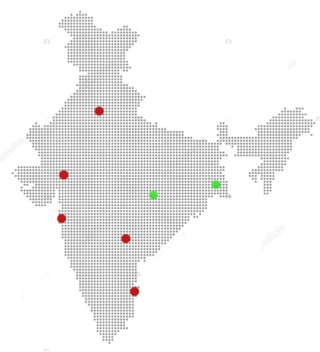
- Regional Support: With branches in Mumbai, Ahmedabad, New Delhi, Chennai, Hyderabad, and Bangalore, TMVT ensures that technical help is always nearby.
Conclusion: Engineering the Future with TMVT
The choice between a turbo blower and a multi-stage centrifugal blower is not a matter of one technology being superior to the other; rather, it is about identifying the technology that best aligns with the specific goals of the facility. For plants where energy efficiency, oil-free air, and low maintenance are the highest priorities, particularly in wastewater aeration and clean industrial air, the High-Speed Gearless Turbo Blower is the definitive choice. Its advanced air-foil bearings and PMSM motor technology set a global benchmark for sustainable operation.
Conversely, for heavy-duty industrial processes, high-pressure vacuum requirements, and the handling of aggressive or hazardous gases, the Multi-Stage Centrifugal Blower offers unmatched robustness, versatility, and structural integrity. Its time-tested design, capable of being customized with up to 10 stages and specialized sealing, ensures reliability in the harshest industrial environments.
As an Indian manufacturer with a global footprint, TMVT Industries Pvt. Ltd. continues to lead the way in air and gas handling innovation. By combining decades of engineering experience with cutting-edge technology, TMVT provides solutions that do more than just move air, they move your entire operation forward into a more efficient and productive future.
Drive Your Operation Forward with TMVT
Are you ready to optimize your industrial air systems for maximum efficiency and reliability? TMVT’s team of experts is ready to assist you in selecting the ideal blower technology for your specific application. Whether you are looking to upgrade an existing facility or design a new one, we provide the tailor-made, top-quality engineering you need to stay competitive in a global market.

TMVT Team
Serving as the Editorial Lead at TMVT, I am a digital content expert passionate about manufacturing innovation and industrial efficiency, committed to delivering high-quality updates and technical guides on machinery trends for our global client base.