Understanding-the-Right-Vacuum-Pump-For-Your-Food-Application.jpg

March 5, 20250

Have you ever wondered how the snacks you love so much stay fresh for weeks or even months? The answer: A small but powerful device — the vacuum pump. In the food Industry, these unsung champions are important in maintaining flavors, lengthening shelf-lives, and retaining the standard of thousands of products we use every day.

But the thing is, not all vacuum pumps are the same. The wrong type of an element—food application—can hinder your entire process, even result in issues that breach food safety regulations or that might affect quality.

In this article, we will explore the food industry vacuum pumps in depth. We will cover different types and their applications for the best results, and show how they play a role in food preservation and processing efficiency. And when you’re done reading you’ll know how to choose vacuum pumps that meet or exceed food safety standards so you can rest assured your product stays fresh, safe and delicious. So let’s take on this adventure of flavor together!

Learning The Appropriate Vacuum Pump To Your Food App

What Are Vacuum Pumps and Why Are They Important in the Food Industry?

Vacuum pumps are devices that remove air and gases from a sealed space, creating a vacuum. In the food industry, they are indispensable for:

  • Extending shelf life: By removing oxygen, vacuum pumps slow down spoilage and oxidation.
  • Preserving flavor and texture: Vacuum sealing locks in freshness and prevents contamination.
  • Improving processing efficiency: From packaging to cooking, vacuum pumps streamline operations.

Types of Vacuum Pumps Used in the Food Industry

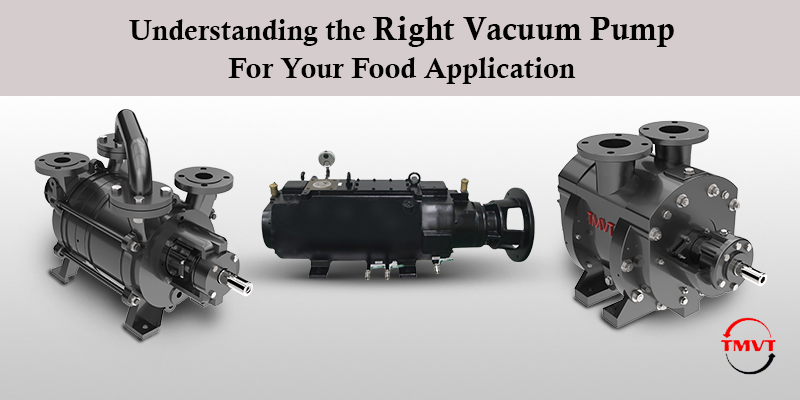
Not all vacuum pumps are suitable for every food application. Here are the three main types of  Vacuum Pumps used in the food industry, along with their advantages and best uses:

Oil-Sealed Rotary Vane Pumps

Performance Characteristics of Rotary Vane Pumps Oil-Sealed Rotary Vane Pumps are used in such food processing and packaging applications. These pumps offer:

  • High vacuum levels
  • Robust performance
  • Cost-effectiveness

Dry Screw Pumps

Dry screw pumps are becoming popular in the food industry because of:

  • Oil-free operation
  • Low maintenance requirements
  • Ability to handle vapors and moisture

Liquid Ring Pumps

  • Tolerant to moisture
  • Handles wet processes efficiently

Each of them has its advantages and spaces they work best in:

Pump Type Advantages Best Applications
Oil-sealed rotary vane High vacuum levels, cost-effective General food packaging
Dry screw pump Oil-free operation, low maintenance Sensitive food products
Liquid ring pump Tolerant to moisture, ideal for wet processes Beverage processing, meat packaging

👉 Not sure which vacuum pump suits your food processing needs? Contact TMVT for expert guidance and customized solutions

Contact Us

Key Applications of Vacuum Pump in the food industry

The versatility and efficiency of electric fields make them essential tools in diverse food applications, enhancing product quality, safety, and shelf stability.

Food Packaging and Preservation

Vacuum pumps are essential in food packaging and preservation, helping to keep food fresh and safe for consumption. These devices play an important role in:

  • Modified Atmosphere Packaging (MAP): Reduces oxygen content, slows spoilage
  • Vacuum sealing: Prevents oxidation, maintains flavor
  • Shelf-life extension: Extends product longevity, reduces waste.

Food Processing

Vacuum pumps are essential for multiple applications in food processing:

  • Deaeration: Removing air bubbles from liquids and semi-solids
  • Freeze-drying: Preserving food while maintaining nutritional value
  • Vacuum cooking: Enhancing flavor and texture of foods

Bottling and Canning

In the industrial sectors of bottling and canning, vacuum pumps ensure:

  • Proper sealing of containers
  • Removal of excess air
  • Prevention of contamination

Vacuum Filtration

Uses of vacuum pumps in the beverage industry:

  • Clarifying liquids and removing impurities
  • Enhancing product quality in the beverage and dairy industries.
  • They are also used in the meat industry to tenderize and marinate

The 7 Main Factors To Consider When Buying a Vacuum Pump For Food Application:

There are multiple factors that should guide your choice whenever you are looking for a vacuum pump:

  • Required Vacuum Level: Ensure the pump can achieve the necessary pressure for your application.
  • Flow Rate Needs: Match the pump’s capacity to your production volume.
  • Operating Environment: Consider temperature, humidity, and other environmental factors.
  • Maintenance Requirements: Opt for pumps with low maintenance needs to reduce downtime.
  • Energy Efficiency: Choose energy-efficient models to lower operational costs.
  • Noise Levels: Consider noise reduction for a better working environment.
  • Compliance with Food Safety Standards: Ensure the pump meets FDA, HACCP, and ISO 22000 standards.

Also Selecting the right size vacuum pump can be crucial for performance and efficiency. If the pump is undersized, it will fail to reach the proper vacuum level, while if it is oversized, it will consume much energy — which in turn, will be reflected in higher operation costs.

How Vacuum Pumps Enhance Efficiency In Food Processing Operations?

Streamlined Production

Vacuum pumps are essential in food processing operations. They also reduce the process time by a lot:

  • Accelerating drying and dehydration processes
  • Enhancing mixing and blending efficiency
  • Facilitating faster cooling and freezing

For example, in freeze-drying applications vacuum pumps can decrease processing time by up to 30% leading to greater throughput.

Energy Conservation

Energy savings with vacuum pumps in food processing:

Process Energy Savings
Drying Up to 40%
Cooling Up to 25%
Packaging Up to 35%

Vacuum pumps create low-pressure environments that decrease the heat necessary and ultimately lower energy needs.

Product Quality Enhancement

The vacuum technology helps improve the quality of food in many ways. Some of them are as follows –

  • Preserving nutritional value
  • Maintaining color and texture
  • Reducing oxidation and spoilage

Or that vacuum-assisted blanching preserves as much as 25% more vitamin C than traditional methods do in vegetables.

Waste Reduction

The waste reduction circle in food processing involves vacuum pumps in the following ways:

  • Reducing product loss in packaging
  • Improved preservation for longer shelf life
  • Yield improvement on extractive processes

Not only do these benefits improve efficiency, but they also further sustainability in food production.

👉 Optimize your food production with the right vacuum pump. Get a free consultation today!

Get a Free Consultation

Vacuum Preservation: Extending Shelf Life and Reducing Waste

Vacuum pumps are essential in prolonging the shelf life of food by developing an atmosphere that prevents microbiological growth and oxidation. These pumps remove volumes of air from packaging, effectively lowering the oxygen level, which is a key element in survival & reproduction for most spoilage organisms. This procedure delays spoilage and cooking by prolonging the quality of the food.

 Advantages of Vacuum Preservation

  • Inhibits bacterial growth
  • Prevents oxidation and rancidity
  • Maintains food texture and flavor
  • Reduces food waste

Shelf Life Extension for Different Food Types

The scale of vacuum maintenance varies for different category of food. Here’s a comparison:

Food Type Shelf Life Extension Notable Benefits
Meats 3-5 times longer Prevents freezer burn
Cheese 2-3 times longer Maintains texture
Fruits 1-2 weeks extra Preserves color
Dry goods Several months Protects from moisture

 Vacuum Pumps in Modified Atmosphere Packaging (MAP)

Modified Atmosphere Packaging (MAP) is a game-changer in food preservation. Vacuum pumps play a crucial role in this process by:

  • Evacuating air and replacing it with a specific gas mixture.
  • Creating an optimal atmosphere for each food type.
  • Extending shelf life by suppressing microbial growth and oxidation.

For example:

  • High-CO2 atmospheres: Ideal for baked goods to prevent mold.
  • Nitrogen-rich environments: Perfect for nuts and snacks to prevent oxidation.


Tips for Selecting Food Safety Compliant Vacuum Pump Manufacturers

When choosing a vacuum pump manufacturer, food safety compliance should be your top priority. Here’s what to look for:

Evaluating Food Safety Compliance

When selecting vacuum pump manufacturers for food applications, it’s crucial to ensure they comply with stringent food safety standards. Look for certifications such as:

  • FDA (Food and Drug Administration) approval
  • HACCP (Hazard Analysis and Critical Control Points) certification
  • ISO 22000 Food Safety Management System
  • GFSI (Global Food Safety Initiative) recognition

Material Compatibility Assessment

Select manufacturers that employ food-grade materials in their vacuum pumps. Key considerations include:

  • Construction: stainless steel
  • Food-grade lubricants
  • Non-toxic seals and gaskets

Assessing Cleaning and Maintenance Protocols

Food safety relies heavily on cleaning and maintenance. Assess manufacturers according to:

Easy-to-clean designs
CIP (Clean-in-Place) compatibility
Detailed maintenance guidelines
Availability of food-safe spare parts

Examining Quality Control Measures

Check the manufacturer has strong quality control measures:

  • Regular product testing
  • Traceability systems
  • Good Manufacturing Practices (GMP) compliance
  • Inspections and audits by third parties

Choosing the Right Vacuum Pump for Your Food Application

Selecting the right vacuum pump is critical for ensuring optimal food processing, packaging, and preservation. By understanding the different types of vacuum pumps, their applications, and the factors to consider when choosing one, you can make informed decisions that enhance your production efficiency and comply with food safety standards.

When selecting a vacuum pump manufacturer, prioritize those that adhere to stringent food safety regulations. This ensures your equipment meets industry standards and contributes to the overall quality and safety of your food products. With the right knowledge and collaboration with reputable manufacturers, you can leverage vacuum technology to elevate your food processing operations and deliver premium products to consumers.

If you’re looking for the best vacuum pump manufacturers in India, look no further than TMVT Industries Pvt Ltd. With years of expertise and a commitment to quality, TMVT offers state-of-the-art vacuum pumps designed specifically for the food industry. Visit tmvt website to explore their range of products and discover why they are the trusted choice for food manufacturers across the country.

Why Choose TMVT Industries Pvt Ltd?

  • Industry-Leading Expertise: Decades of experience in vacuum pump technology.
  • Food-Safe Solutions: Compliant with FDA, HACCP, and ISO 22000 standards.
  • Customized Options: Tailored solutions for your specific food applications.
  • Energy-Efficient Designs: Reduce operational costs while maintaining high performance.
  • Exceptional Customer Support: Dedicated service and maintenance teams to ensure seamless operations.


The-Science-Behind-High-Speed-Turbo-Blowers-Why-Efficiency-Matters.jpg

January 29, 20250

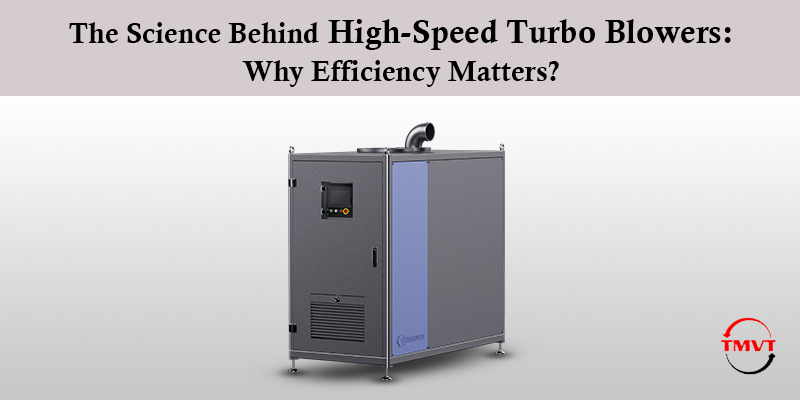
Energy efficiency is the single most critical factor for modern industrial plants looking to reduce operational costs. Many facilities still rely on outdated aeration systems that consume excessive electricity and require frequent maintenance. The introduction of High Speed Turbo Blowers has transformed this landscape by offering a solution that drastically cuts energy usage while improving reliability. This article explores the engineering science behind these advanced machines and explains exactly why upgrading to turbo technology is a smart investment for your business.

How Turbo Blowers Work?

  1. So, at the outset, let’s understand the workings of turbo blowers.

Fundamentally, a turbo blower functions on a combination of aerodynamics and mechanical precision that helps generate airflow.

Some basic principles of these blowers include the following.

  • Compression and Expansion: Turbo blowers compress air or gas as it flows across the system. While increasing the air’s pressure and velocity, it creates high-speed streams that various applications require.
  • Impeller Dynamics: The impeller is a rotating disk with blades that drive the compression process. While spinning at a high velocity, the impeller accelerates the surrounding air radially outward, thus converting rotational energy into kinetic energy.

Key Parts of High Velocity Air Machines and Their Roles

Turbo blowers are composed of various parts that make up for their efficiency.

  • Impeller Design: The impeller’s thoughtful design, including its shape, size, and material is optimized to deliver the expected levels of efficiency. They have advanced designs that include curved blades to reduce air resistance and lightweight alloys to minimize energy consumption.
  • Motor and Drive: Modern blowers have variable-speed drives (VSDs) that ensure precision control over airflow and pressure.
  • Bearings: High-speed turbo blowers usually have air-foil bearings that eliminate the need for lubrication, and ensure zero friction, and quieter operations.

Aerodynamics

And there we are! While the design and components undoubtedly play a crucial role, one cannot discount the role aerodynamics plays in driving blower efficiency.

  • Reducing Drag: Experts use computational fluid dynamics (CFD) to design blowers that minimize internal drag, paving the way to smooth airflow paths, preventing turbulence, and enhancing efficiency.
  • Pressure vs. Velocity: Turbo blowers specialize in converting velocity energy into pressure energy for crucial processes like aeration in wastewater treatment.

Innovation that Drives Efficiency

High-speed turbo blowers deliver the desired levels of efficiency due to;

  • Smart Controls: They are equipped with advanced sensors that monitor and adjust operations in real-time, optimizing performance and efficiency.
  • Heat Recovery: Processes generate varying amounts of heat. High-speed turbo blowers have heat recovery mechanisms that capture the heat produced during operations so that it can be used for other processes.
  • Direct Drive Systems: Additionally, high-speed blowers are also equipped with direct drive systems that eliminate energy losses related to gear systems.
  • RPM: Under a magnetic synchronized motor, the RPM reaches up to 400,000.

Where are High-Speed Turbo Blowers Used?

As a result of the efficiency and constant airflow that they deliver, high-speed turbo blowers are used across various applications, including the following.

  • Wastewater treatment
  • Power generation (cooling systems, gas turbines, etc.)
  • Industrial processes (chemical and petrochemical industries)
  • Food and beverage
  • Mining and cement production
  • Semiconductors and electronics manufacturing
  • Fermentation
  • desulphurization

Innovation that Drives Efficiency. Efficiency that Contributes to Progress!

Apparently, high speed blowers might seem like machines that support a particular process. However, like every machine, they contribute to efficient operations, enabling industries to maintain precision in the associated process.

As for the efficiency of high-speed blowers, it is their innovative design, precision engineering, and advanced aerodynamics that prove instrumental.

Of course, one cannot discount the role of manufacturers in this.

Some of the best in the business, including TMVT, ensure thoughtful designs that serve the diverse airflow needs of various processes.

So, if you’ve been looking to transform the efficiency of your industrial processes with top-tier high velocity air machines, choose TMVT.

Explore our product page and email us at tmvtmumbai@tmvt.com to connect with our experts and discuss your industrial process requirements.


Optimizing-Pneumatic-Conveying-Systems-with-High-Performance-Roots-Blowers.jpg

January 15, 20250

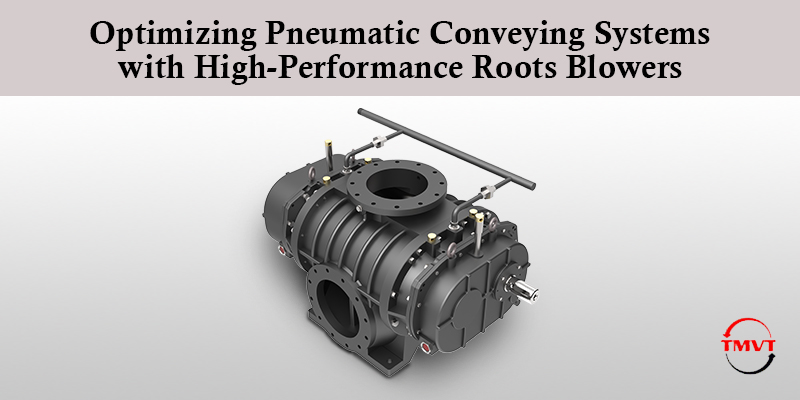
High-performance root blowers are commonly used across pneumatic conveying systems due to some obvious advantages. These include the positive displacement principle, high pressure that enables long-distance conveying, and the straightforward design of blowers.

Some key applications where root blowers are used in pneumatic conveying include dilute phase conveying, dense phase conveying, and vacuum conveying.

However, the industry also uses it to optimize pneumatic conveying machines.

Understanding Pneumatic Conveying Machines

Pneumatic conveying systems are designed to move bulk materials such as granules and powders and dry materials through pipelines by using gas or air. pneumatic conveying machines are used in different industries such as foods processing and pharmaceuticals plastics and chemicals because of their effectiveness and capability to ensure their integrity throughout transport. This process creates an air pressure differential which moves substances from one location in an enclosed pipeline. This creates the environment is clean and free from contamination. Root blowers play an essential part in these systems, providing the airflow required and pressure that allows materials to be conveyed efficiently. They are able to supply a constant uninterrupted, non-pulsation air flow is ideal for heavy and dilute phase conveyance which improves the performance of pneumatic conveying equipment.

Thus, this post particularly focuses on the optimization part, explaining the factors that contribute to it. Here’s more to it.

Maintaining Consistent Airflow and Pressure

Root blowers provide steady and pulsation-free airflow that helps seamlessly move the material through the pipeline. Such consistency reduces the risk of blockages and improves system efficiency, thus optimizing pneumatic conveying performance.

Enhanced Material Handling

Another significant advantage of high-performance root blowers in the context of pneumatic conveying systems is improved material handling.

It enables precision airflow control and pressure that enables root blowers to handle delicate or fragile material without damaging it.

This particularly proves beneficial in industries that deal with critical items like pharmaceuticals and food processing.

Minimized Heat and Noise

High-performance root blowers, particularly those manufactured by responsible manufacturers like TMVT also help reduce heat and noise. These blowers minimize heat generation, and the noise output, helping make the workplace more peaceful and increase the longevity of the blower and associated components.

Energy Efficiency

Lowering energy consumption is one of the most crucial requirements of every modern industrial setup that employs complex machinery and equipment.

Modern root blowers precisely fit this parameter. They are designed to operate with high efficiency helping industries reduce energy consumption while maintaining the necessary airflow and pressure levels.

The long-term dual impact of this attribute is lowered operational costs and adherence to sustainable practices.

Customization and Flexibility

Customization is another crucial element, encouraging industry owners to use root blowers for different pneumatic conveying operations.

Thus, contemporary performant root blowers can be customized to meet the specific requirements of pneumatic conveying systems like variable speed drives (VSDs) to align the airflow, depending on the material load, length of the pipeline, etc.

Durability and Reliability

Pneumatic conveying is a specialized and critical task that demands durable and reliable equipment, of which high-performance root blowers are part.

Manufacturers like TMVT often use robust, premium, and industrial-grade components and sealing technologies that contribute to the blower’s longevity.

It helps make the mechanism more reliable, minimizing potential downtime and enabling seamless operations, while also curtailing maintenance costs significantly.

Compact Design

Space is a major constraint for companies across every industry. Companies look to optimize the available space with smartly sized equipment.

No wonder, there’s a massive demand for compact machinery these days.

High-performance root blowers fulfill this need. They are designed to save space, which is why they are apt for retrofitting into existing systems or companies with limited usable floor space.

Looking to Optimize Your Pneumatic Conveying Machines?

Connect with TMVT for high-performance root blowers to help you achieve the optimization objective!

We are one of the leading manufacturers of performant root blowers that provide three lobe root blowers and twin lobe root blowers to serve the varying and evolving needs of the industrial world.

Our long-running clientele from various industries like pharmaceuticals, food and beverages, chemical processing, cement sector, etc., are a testimony to the success of our offerings and the trust that the industry has in them.

Visit our root blowers page to explore more and click to get a quote.


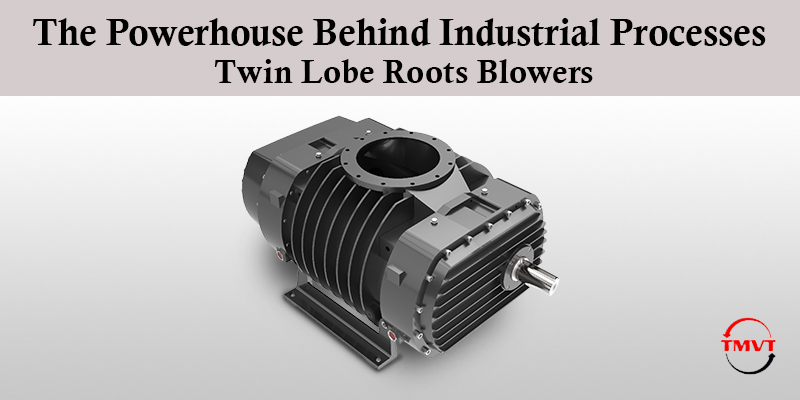
The-Powerhouse-Behind-Industrial-Processes-Twin-Lobe-Roots-Blowers.jpg

December 15, 20240

Industrial processes often comprise intricate mechanisms to deliver the desired outcomes. These processes use various elements like air, gases, liquids, etc.

For instance, some industrial processes, like those in petrochemicals, power generation, wastewater treatment, etc., involve gases or air as part of operations.

The processes require a constant flow of air or gas at varying pressures.

Now, this is where twin lobe root blowers come into play.

Also called twin lobe blowers, positive displacement blowers, or roots blowers, they help generate a consistent and constant flow of gas or air at diverse pressures. They are used in industrial processes to convey air or gases without compression.

However, is that the only benefit of twin lobe roots blowers?

No. So, let’s look at some other reasons that make twin load air blowers the powerhouse behind industrial processes.

  • Consistent Airflow

One of the first benefits of a twin lobe blower is that it delivers a steady and non-pulsating airflow, necessary for processes that require consistent pressure. A couple of process examples include aeration or pneumatic conveying.

  • Energy Efficiency

Twin lobe blowers procured from the right and responsible manufacturers also help industries achieve a certain level of energy efficiency.

They do so by lowering power consumption and reducing operational costs significantly.

The best twin lobe blower manufacturers incorporate energy efficiency as an attribute during the design industry to benefit industries with continuous operations.

  • Versatility

Twin lobe blowers are also known for their versatility.

For example, they handle an extensive range of pressures and volumes.

Accordingly, they are apt for various applications, including vacuum packaging, wastewater treatment, and combustion air supply.

  • Durability and Low Maintenance

Twin lobe blowers manufactured by leading manufacturers like TMVT comprise robust materials and straightforward designs.

While exemplifying durability, such twin lobe blowers demand minimal maintenance and longevity, ensuring dependability across demanding environments.

  • Noise Reduction

Blowers are conventionally associated with a sound that creates a commotion.

But that doesn’t necessarily have to be like that, particularly when you have twin load air blowers with soundproofing features.

Accordingly, contemporary blowers reduce noise levels and contribute to a more peaceful and comfortable working environment.

  • Contaminant-Free Operation

In modern twin lobe roots blowers, the lobes and casing do not have contact. Hence, these blowers enable oil-free air delivery, essential for pharmaceutical, electronics, and food processing applications.

  • Oil-Free Functioning

Our twin lobe root blowers are oil-free. Hence, they are highly efficient for applications involving air or gas without contamination.

  • Customizability

Every industrial process has a specific need and therefore demands customized devices and equipment.

Twin lobe blowers, particularly those manufactured by companies like TMVT, can be customized to meet specific industrial needs like handling corrosive gases or high-temperature operations.

However, no matter the customization, these blowers operate efficiently and optimize the purpose for which they’ve been deployed without compromising quality.

Need a Twin Lobe Blower for Your Industrial Application?

The answer is TMVT. We are a reliable twin lobe blower manufacturer with years of experience in manufacturing equipment supporting various industrial processes.

Twin load air blowers are amongst our extensive product range. Some features of our twin lobe roots blower include the following.

  • Suitability for different pressures up to 1 Kg/cm2 in single stage and up to 2.2 Kg/cm2 in double stage
  • Accurate dimensions
  • Highly right tolerance
  • Guaranteed interchangeability
  • Drastic reduction of noise level to 10 to 12 dB (A) at 1 M distance
  • Oil-filled side casings and lubrication for bearings & gears
  • Individually tested blowers with test procedure based on IS-10431/IS-5456-Rev

Need more insights into our twin lobe roots blowers? Visit our product page!


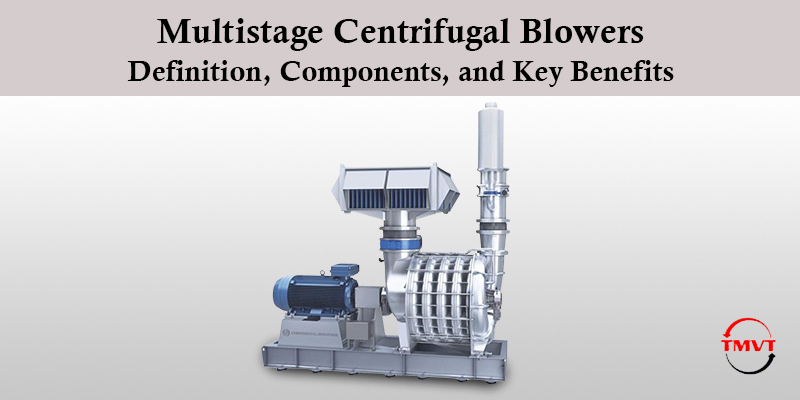
Multistage-Centrifugal-Blowers-Definition-Components-and-Key-Benefits.jpg

November 11, 20240

Moving high volumes of air or gas at relatively low pressure is part of various applications, including wastewater treatment plants, power generation, pneumatic conveying, HVAC systems, etc. The process forms a significant aspect of the overall operations and efficiency of these applications. This is where multistage centrifugal blowers step in. Let’s see what they are and explore their benefits in this blog.

What are Multistage Centrifugal Blowers?

These blowers have rotating machines that can increase the pressure or gasses through a centrifugal force usually transmitted by an electric motor. Some essential parts and components of centrifugal blowers include the following.

  • Balance Piston: It reduces pressure on the drive bearings by negating the axial force. Furthermore, it increases rotor bearing longevity and minimizes compressed gas leakages.
  • Baffle Rings: These direct the airflow seamlessly into the impeller’s eye, considerably reducing the inlet passage losses.
  • Flexible Coupling: This connects the blower and exhauster directly to the power source. It maximizes power transfer and reduces the load on bearings.
  • Multistage Impellers: These are arranged in a series, where every impeller expedites the air and increases pressure.
  • Labyrinth Seal: The seal reduces gas leakages throughout different stages and restricts the reversal of the airflow.

Benefits of Multistage Centrifugal Blowers

Multistage industrial centrifugal blowers offer various and diverse advantages. Some essential ones are discussed in the following section.

  • Operational Efficiency and Cost-Savings

Multistage centrifugal blowers are designed to operate across various pressures and flow rates. These capabilities make them suitable for industrial applications involving precision air movement. Additionally, they help reduce energy consumption, thus proving energy-efficient, and assisting companies to save more in the long run.

  • Customizable Pressure and Flow

By adding or removing stages, you can customize these blowers to meet your application’s specific pressure and flow requirements. These customization capabilities define their suitability for different applications, including power generation, water treatment, and chemical processing. Furthermore, multistage centrifugal blowers maintain stable airflow and pressure – an essential requirement for processes requiring continuous and predictable airflow.

  • More Peaceful Operations

Unlike other blowers, multistage centrifugal blowers operate more quietly. Hence, they help reduce noise pollution and the distraction equipment commotion can cause.

  • Sustainability

Since industrial centrifugal blowers are designed to be energy-efficient, they consume less energy and also help reduce greenhouse gas emissions. Besides, they support processes that remove contaminants from the air, contributing to a cleaner and more hygienic environment. So, if you are a company committed to sustainability and looking for solutions to support your environmental endeavors, multistage centrifugal blowers are the go-to solution.

  • Low Maintenance

These blowers usually have fewer moving parts, which helps reduce wear and tear. Additionally, they comprise a robust design that minimizes the need for frequent repairs or replacements resulting from breakdowns or unplanned maintenance. And that also increases their longevity. Furthermore, even when maintenance is required, you can do it effortlessly with the help of experts.

Looking for Reliable Centrifugal Blowers in India?

Partner with TMVT and explore our spectrum of centrifugal blower products, exclusively designed for heavy-duty industrial use! As a company committed to excellence, our products comprise top-class parts and components, competent features, and functionalities. They exemplify efficiency, enabling companies to manage the movement of high volumes of gasses and air seamlessly.

Learn more about our multistage centrifugal blower or make a product inquiry. Our experts will connect with you and walk through our product features and capabilities.


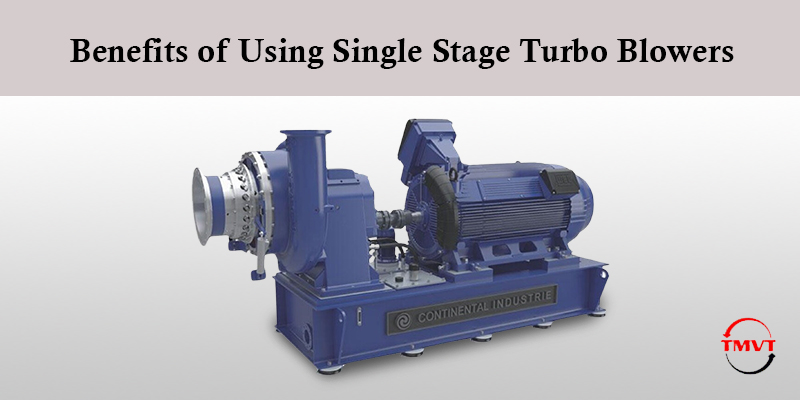
Benefits-of-Using-Single-Stage-Turbo-Blowers.jpg

November 11, 2024

As energy consumption and costs continue to rise, companies focus on saving energy while maintaining a certain efficiency level. Thanks to various equipment types that make it possible! Single stage turbo blowers are one of them. These serve numerous applications across the industrial world, particularly in companies that deal with airflow management. As one of the leading manufacturers of such blowers, TMVT supports companies with its premium products and comprehensive service. So, if you have been looking for one, we are here to cover you with our product range. While we will discuss it shortly, let’s first look at some of its benefits in this blog.

What are Single Stage Turbo Blowers?

Also called geared turbo blowers, these are performant and energy-saving machines used across various applications, including wastewater treatment, pneumatic conveying, aeration, oil-free compression, high-pressure ventilation, and many more.

Often, these applications involve managing large volumes of air or gas at relatively low pressures. These dynamic blowers use a single impeller to compress and move air or gas, unlike multi-stage blowers that use multiple impellers.

Some features include high efficiency, straightforward control systems, tilt pad force lubricated bearings, inlet and outlet vane control, and variable speed control.

Benefits of Single Stage Turbo Blowers

Single stage turbo blowers are known for their benefits. Let’s look at some of them.

  • Enhanced Efficiency

These blowers are designed to perform optimally while consuming less energy (35-40 percent lower than conventional blowers). They have an aerodynamic design minimizing energy losses, and helping industries reduce operational costs. Furthermore, single-stage turbo blowers have advanced impeller designs that optimize airflow and increase power usage efficiency.

  • Simple and Precise Design

Single stage blowers have a straightforward and precise design that makes operating them easy and efficient. Companies can use them effortlessly while ensuring they meet the desired purpose.

  • Reduced Operational Costs

Single stage blowers usually have fewer moving parts than multi-stage systems. It reduces maintenance needs, increases operational reliability, and lowers failure rates. Additionally, many models have an oil-free design, eliminating the need for lubrication and the material and labor costs associated with it.

  • Decreased Noise Levels

Conventional blowers often form a significant source of noise. However, technological advancements in this realm have made it possible to reduce noise levels considerably. Single stage turbo blowers perfectly exemplify those advancements. They operate more silently than traditional blowers. While contributing to a more peaceful working environment, it also reduces costs associated with installing noise control measures.

  • Load Variation Handling

Efficient load variation management refers to a higher turndown ratio. That makes single stage blowers suitable for applications with fluctuating airflow requirements.

Looking for Single Stage Turbo Blowers manufacturer in India?

TMVT is a one-stop destination for highly advanced, premium, and performance-oriented geared turbo blowers. We manufacture blowers considering the specific airflow management needs of various industrial applications. Thus, while helping companies manage airflow efficiently, our blowers contribute value by reducing operational costs. Explore our single stage geared turbo blowers and learn more about their technical specifications and applications. You can also consider making a product inquiry and moving closer to efficient airflow management.


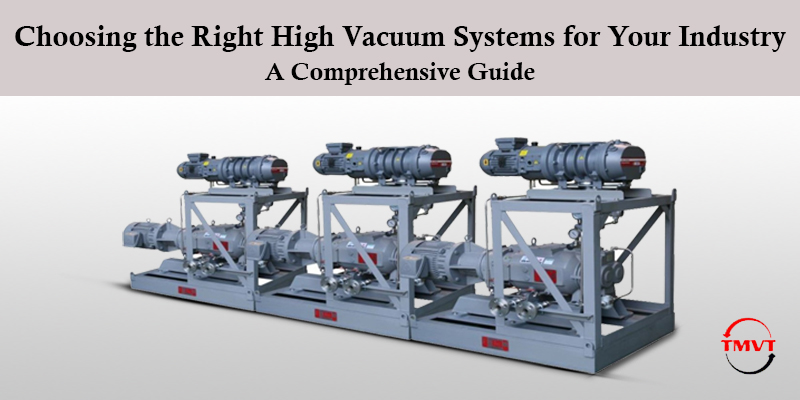
Choosing-the-Right-High-Vacuum-Systems-for-Your-Industry-A-Comprehensive-Guide.jpg

August 29, 20240

High vacuum pumps have widespread applications, including metallurgy, chemicals, semiconductors, and more. These pumps help achieve extremely low absolute pressure levels and run continuously when connected to the closed containers until you empty them. If you work for an industry that requires high vacuum systems, making the right choice becomes evident. However, with so many options around, choosing high vacuum systems could be challenging. Here are a few essential factors to consider while selecting one.

5 Factors to Consider While Selecting High Vacuum Pumps – High Vacuum System Guide

From determining your requirements to examining the ultimate pressure, here are five significant factors you must consider before you make your choice.

.Figuring Out Your Vacuum Needs

The first step is determining how much vacuum you need. It will help you choose a pump that precisely serves your vacuum requirements. While doing so, you must determine the pressure and flow rate you expect from the vacuum. The pressure depends on the application involved. On the other hand, the flow rate is based on the system’s size where you will need vacuum services.

.Pump Type

Another essential consideration is choosing the right pump type. Depending on your application’s needs and the desired vacuum level, you must decide whether you need a turbomolecular pump, mechanical pump, diffusion pump, or cryogenic pump. It would help assess the advantages and disadvantages of every vacuum pump to make the right and informed choice.

.Pump Speed

A pump’s pumping speed is the volumetric flow across a point at the pressure measured at the plane. Accordingly, you must evaluate the pumping speed for your process. It is often measured in liters per second (L/s). If you need a high throughput, you will need pumps with higher speeds. Additionally, you should consider the pace at which the system should reach the intended vacuum level. It is a critical consideration for a process where time is of the essence.

.Environment and Safety Considerations

Some vacuum pumps produce considerable noise and vibration, which could be a concern, particularly when you have a facility with limited space. In such cases, you may have to select a smaller pump. Also, if space is a constraint, you may want to select a pump with low noise levels. Additionally, you must choose a system complying with relevant industry safety standards and regulations, particularly if your workplace involves hazardous materials.

.Ultimate Pressure

It is the lowest pressure a pump can achieve. Ultimate pressure can come in as a critical consideration, especially when your application requires external pressure. It is essential to choose a high vacuum pump with an optimum pressure lower than the pressure your application requires.

Need a Reliable High Vacuum System Manufacturer? Choose TMVT!

The choice of the high vacuum pump manufacturer matters as much as the pump itself. If you’ve been looking for a trustworthy one, TMVT is here to cover your needs.

With nearly eight decades of relentless service, top product quality, a focus on energy efficiency in vacuum systems, and end-to-end coverage, including vacuum system maintenance, TMVT proves a prudent choice in the long run. Click to connect us and discuss your vacuum pump needs with our experts.


Understanding-High-Vacuum-Systems-Basics-and-Applications-Across-Industries.jpg

August 29, 20240

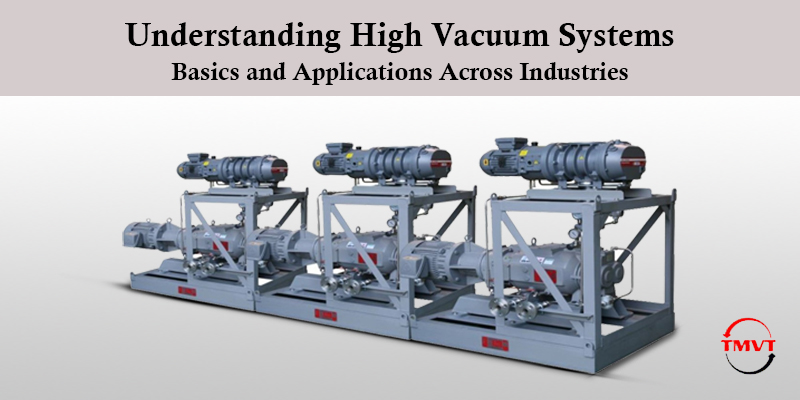
High vacuum systems form an integral part of industries where a controlled and contamination-free environment plays a crucial role. These systems operate at very low pressures, usually ranging between 10-3 and 10-7 millibars (mbar). Accordingly, their relevance extends to various industries, including chemicals, pharmaceuticals, research, aerospace, semiconductors, etc. Vacuum systems have been in use for years. However, if you are new to it and want to explore more about it, this blog precisely serves the purpose.

Basics of High Vacuum Systems

What is a High Vacuum System?

As stated earlier, our high vacuum system operates at a vacuum range up to 0.01 Torr (10-2 millibar pressure) maximum. This pressure is significantly lower than the atmospheric pressure. These systems are critical in setups that require a highly clean and controlled environment.

Types of High Vacuum Systems

Some common types of high vacuum systems include the following.

Mechanical Pumping Systems

These transfer gas in a vacuum system from a lower to higher pressure region.

Turbomolecular Pumps

Turbomolecular systems have rapidly spinning blades that push gas molecules in the desired direction.

Diffusion Pumps

These create high vacuums by moving gas molecules into a vapor jet and separating the gas from the vapor through condensation.

Ion Pumps

Ion pumps blend magnetic field and high voltage to ionize gas molecules, further captured on a solid surface.

Cryogenic Pumps

Also called cryo pumps, these pumps are cryogenic equipment that transfer and pressurize liquified gasses.


How High Vacuum Systems Work

Here’s how high vacuum systems operate.

  • The primary pump removes air and gas, reducing pressure to medium.
  • The secondary high vacuum pump activates to lower the pressure further.
  • The system stabilizes and pumps continuously to remove remaining gasses.
  • Continuous pump operations or the valve that isolates the chamber maintain the high vacuum.

Key Components of High Vacuum Systems and Their Functions

Some key components of high vacuum systems include;

  • Vacuum Pumps – Primary (Roughing Pumps) and Secondary (High Vacuum Pumps)
  • Vacuum Chambers
  • Valves
  • Gauges

Applications  High Vacuum Systems  Across Industries

A few applications of these systems are as follows.

  • Semiconductor Manufacturing: Thin-film deposition lithography and ion implantation
  • Pharmaceutical Industries: Freeze-drying of pharmaceuticals
  • Aerospace and Defense: Simulate outer space conditions spacecraft components, and material testing
  • Research: Scanning electron microscopy (SEM), X-ray photoelectron spectroscopy (XPS), and transmission electron microscopy (TEM).
  • Coating: Producing optical coatings, anti-reflective coatings, and decorative films

Advantages of High Vacuum Systems

High vacuum systems prove beneficial in various ways. These include;

  • Enhanced cleanliness
  • Reduced gas molecules
  • Improved beam control
  • Lowered convection levels
  • A longer mean free path
  • Accelerated deposition
  • Better material purity

Challenges and Considerations

High vacuum pumping systems aren’t devoid of challenges. Some common ones include the following.

Cost Factors

Pumps, control systems and materials that help achieve and maintain high vacuum are costly and add to the overall operational costs.

Technical Issues

The systems also have technical concerns like heat management, surface contamination, pump downtime, maintenance, etc.

Safety Concerns

The pressure differential can exert a lot of mechanical stress on various components and the chamber. Hence, they need a solid design that prevents breakdown or explosion.

Conclusion

So, that was about some essential aspects of high vacuum pumps and high vacuum system applications. As an industry professional, knowing about high vacuum pumps would help you make the right choice and use them optimally. Thus, we hope you found this useful. Connect us  to know more or if you need a reliable high vacuum system for your application.


Shell-and-Tube-Heat-Exchangers-Essential-Information-You-Need.jpg

July 28, 20240

Shell and tube heat exchangers are among the most popular and adaptable designs in the field of industrial heat transfer equipment. These heat exchangers are essential for moving heat between fluids in power plants, chemical processing, oil refineries, and HVAC systems. This succinct book will help you grasp the fundamentals of shell and tube heat exchangers.


What is a Shell and Tube Heat Exchanger?

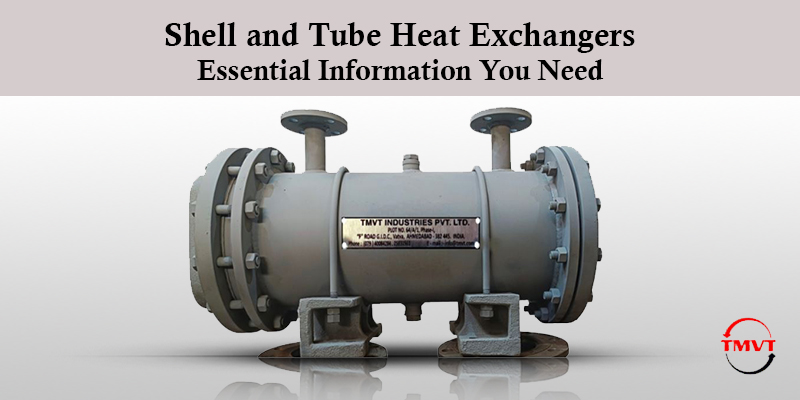
A shell-and-tube heat exchanger is a class of Heat Exchanger designs. It is the most common type of heat exchanger in oil refineries and other large chemical processes, and is suited for higher-pressure applications. As its name implies, this type of heat exchanger consists of a shell with a bundle of tubes inside it.


Essential Elements

Shell:  The external container for the tube bundle. A bundle of tubes through which a fluid passes.

Tube Sheets: Plates that support the tube ends and act as a partition between the fluids on the tube side and the shell.

Baffles: Shell-containing plates that guide fluid flow across tubes to improve heat transmission and provide support for the bundle of tubes.

End Caps or Heads: These cover the ends of the shell and house the connectors for the fluid on the shell’s side, both intake and outflow.

How Shell and Tube Heat Exchangers work?

Essentially, the cooling process involves two fluids, the process and the cooling medium, both of which have varying temperatures. Generally, the process fluid that is being cooled passes through tubes with a somewhat small diameter that are kept inside the shell. The cooling medium is contained and circulated by the outer shell. The heat exchanger requires constant circulation of both cooling and process fluid to operate correctly. Shell and tube heat exchanger use spherical, tiny tubes to provide a broad surface that doesn’t take up extra space in order to be efficient.


Types of Shell and tube heat exchanger:

Fixed Tube Sheet: A straightforward design in which the shell is fastened to the tube sheets. Due to expansion concerns, it is economical but not the best option for applications with large temperature variations.

U-Tube: This design incorporates U-shaped tubes that provide heat expansion without putting undue strain on the tubes. It works well in applications where temperatures are high.

Floating head: This design allows for easier cleaning by tolerating thermal expansion with one fixed tube sheet and one free to move. Perfect for uses when temperature variations are significant.


Shell and Tube Heat Exchangers Benefits

Flexibility: Capable of enduring a broad spectrum of temperatures and pressures.

Durability: They are appropriate for high-pressure applications because to their sturdy design.

Maintenance: Generally simple, particularly for the U-tube and floating head versions.

Efficiency: The capacity to transport heat efficiently, particularly when baffles are used to improve fluid dynamics.


Shell and Tube Heat Exchanger Applications:

The efficiency and versatility of shell and tube heat exchangers make them useful in a wide range of industries. Typical uses are as follows:

Chemical processing: This includes the processes of heating, cooling, evaporating, and condensation.

Oil and gas: Used in petrochemical facilities and refineries for a variety of heat exchange applications.

Power Generation: Essential to heat transmission and recovery operations in power plants.

HVAC systems: Widely used in commercial and residential buildings’ heating and cooling systems.


Conclusion:

The resilience, efficiency, and variety of shell and tube heat exchangers make them essential in a wide range of industrial applications. For optimum performance and longevity, it is essential to understand their parts, how they work, and how to maintain them. Shell and tube heat exchangers provide a dependable option for efficient heat transfer whether working with high-pressure systems or large temperature fluctuations.
For inquiries about TMVT’s Shell and Tube Heat Exchangers and other industrial solutions contact us. Our team of experts is ready to assist you with any questions or requirements you may have


Heat-Exchangers-–-Definition-Types-Uses-and-Fluid-Types.jpg

July 28, 2024

The industrial world deals with and performs multiple processes that produce a massive amount of heat. Many of these processes involve liquids, wherein heating or cooling a liquid is part of the core workflow. Heat exchangers play a role in processes where heat is involved. These systems help transfer heat from one medium to another. The primary objective of using a heat exchanger is to cool or heat the fluid through thermal energy transfer. As a result, these devices are used across multiple industries. If you are new to heat exchangers and need more insights into them. Here’s a basic blog that serves the purpose.

What is a Heat Exchanger?

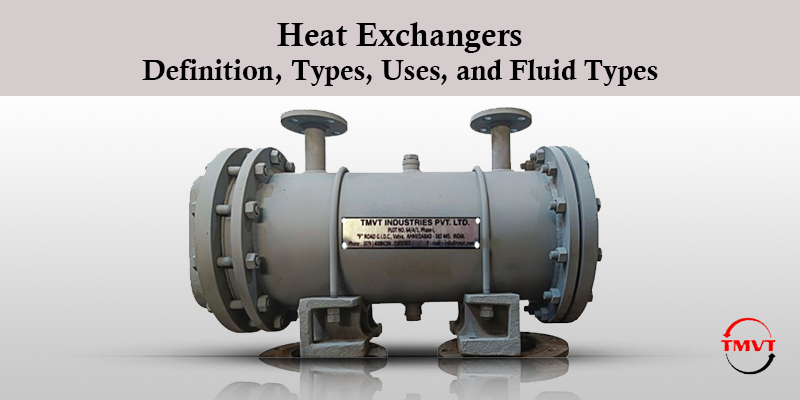
As stated above, a heat exchanger is a device that transfers heat between two mediums. The heat is transferred by conduction through the exchanger material that separates the mediums involved. Heat exchangers are available in different types, including shell and tube heat exchangers, air-cooled, and plate types.

So, while an air-cooled heat exchanger passes cool air via a core of fins to cool a liquid, a shell and tube heat exchanger transports fluids through and over tubes. Let’s now overview the different types of heat exchangers.

What are the Various Types of Heat Exchangers?

Heat exchangers are available in different types based on their application. Let’s look at three significant ones.

  • Shell and Tube: These have various small tubes within a cylindrical shell. The tubes are placed in the cylinder with a tube bundle or “tube stack” with fixed tube plates or a floating tube stack, allowing the tube bundle to expand and contract with varying heat conditions and enabling easy removal for servicing, maintenance, and repairs.
  • Plate Type: These are similar to the shell and tube counterparts. They use various stacked plates, instead of tubes. Plate-type heat exchangers are often brazed or gasketed based on the application and fluids involved. They have a stainless-steel structure that makes them ideal for F&B applications.
  • Air Cooled: These exchangers are used to cool a liquid, used in automobile radiators (due to the absence of a permanent source of cool water). Air-cooled systems have a fan or use airflow caused by the vehicle’s movement to provide cool air.

Applications of Heat Exchangers

Heat exchangers are used across various applications, including the following.

  • Automotive: Radiators work as heat exchangers to reduce engine fluid temperature
  • HVAC Systems: To heat and cool buildings
  • Refrigeration Systems: To transfer heat away from cooling units
  • Power Plants: Enhance efficiency with the transfer of waste heat for reuse
  • Marine: Marine oil cooling, manifold heat exchange, header tank heat exchange, etc.

Types of Fluids Used in Heat Exchangers

The fluid type’s suitability depends on the heat exchange type used and the available material. Leading heat exchanger manufacturers in India like TMVT design heat exchangers to work with most fluid types. These include water glycol, oil, water, and seawater. To work with more corrosive fluids like refrigerants, chlorinated salt water, acids, etc., materials like titanium and stainless steel prove more useful.

Understanding Temperature Cross Over in Heat Exchangers

It describes the scenario where the temperature of both circuits in a liquid cooled heat exchanger begins to cross over. It can prove a crucial factor in a heat exchanger design as the cooler’s efficiency will be significantly reduced when the temperatures cross over. In cases where you can avoid a temperature cross over, you can use a plate heat exchanger.

How to Enhance a Heat Exchanger’s Efficiency?

One can define heat exchanger efficiency in different ways, including the following.

  • Temperature Differential: The difference between the coolant and hot fluid is crucial while designing a heat exchanger. The coolant must be at a lower temperature than the hot fluid. Lower temperatures help take more heat out of the hot fluid than higher coolant temperatures.
  • Flow Rate: It is another important factor in the primary and secondary side of the heat exchanger. A higher flow rate increases the exchanger’s capability to transfer heat. However, that also refers to greater mass. It can make energy removal more challenging, while increasing velocity and pressure loss.
  • Installation: The manufacturer’s instructions matter while installing the heat exchanger. However, usually, the most efficient way of installing it is with the fluids flowing in a counter-current arrangement.

Looking for Reliable Heat exchangers Manufacturer in India?

Are you looking for more insights into heat exchangers, their applications, and suitability in your industrial context? Connect with TMVT. As one of the leading heat exchanger manufacturers in India, we manufacture industrial-grade heat exchangers suitable for diverse applications, including those mentioned above and beyond.


Head Office

Manek Mahal, 5th & 7th Floor,
90, Veer Nariman Road, Churchgate,
Mumbai – 400 020, INDIA.
+91(0)22 22830060/68

+91 (0) 22 – 35219523/9539/9359/9796

www.tmvt.com

tmvtmumbai@tmvt.com


Our Locations


Get in touch with us

Looking for more information about TMVT’s products or services?

Contact us

error: Content is protected !!